Bordering on Embroidery
(2004 - 2007)
|
The title “Bordering
on Embroidery” unites two concepts expressed in the series of
works in this exhibition. “Border” has many layers of meaning,
including that which exists on the edge, that which is distant and that
which is tangential (touching another area without becoming a part of
it). These works range from the political to the most personal, from
territory to emotions.
“Embroidery” is within the semantic field
of traditional feminine craft, which usually involves the patient
assembly of detail upon detail to create a single decorative form.
In Hebrew, embroidery is “Rikma.”
But the Hebrew “Rikma” also means tissue, in the anatomical
sense. Thus its meaning is connected to the body, as in “skin tissue.”
It is also connected to the “body” of society, expressed metaphorically
in “the tissue [fabric] of life.” These works combine the two concepts
to generate new and complex insights on the personal and the political.
“Bordering on Embroidery” is a series that deals with borders and femininity. Miriam
Neiger-Fleischmann was born in a border town that is divided between
Hungary and Slovakia by the Danube River. The studio where these works
were created is near the virtual Green Line, in Beit Zafafa, which was
divided between Israel and Jordan from 1948 to 1967.
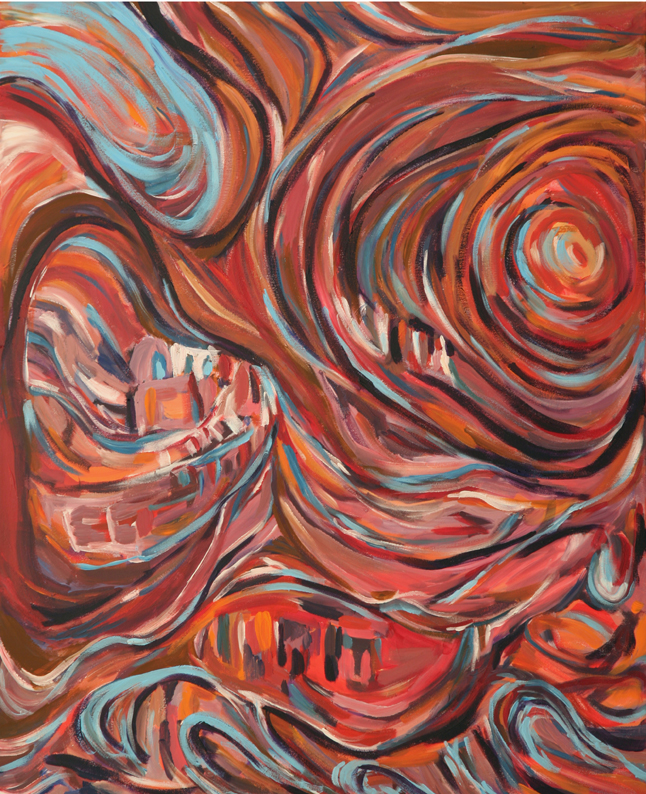
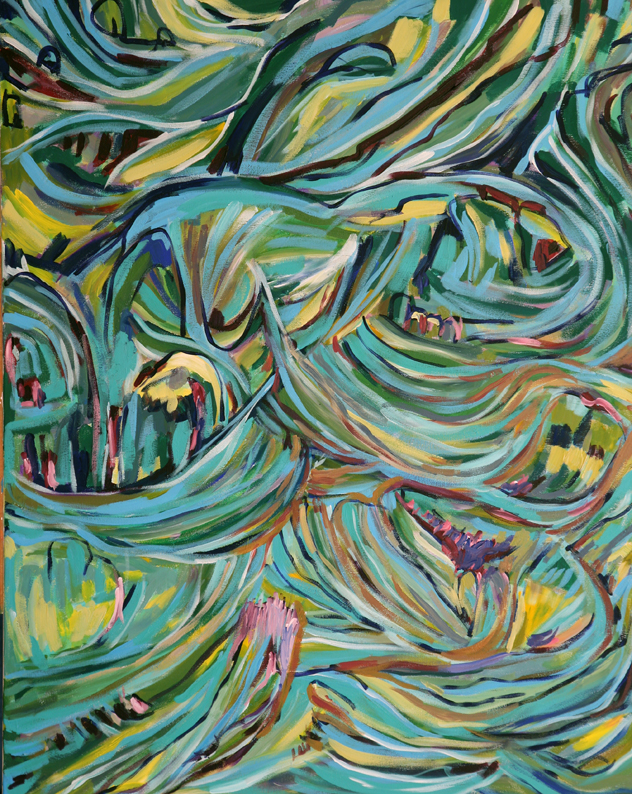
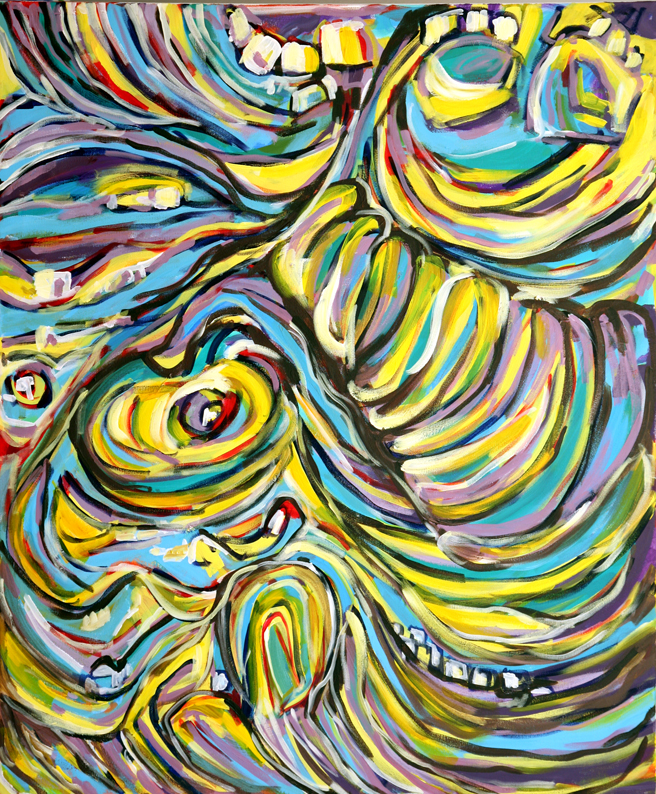
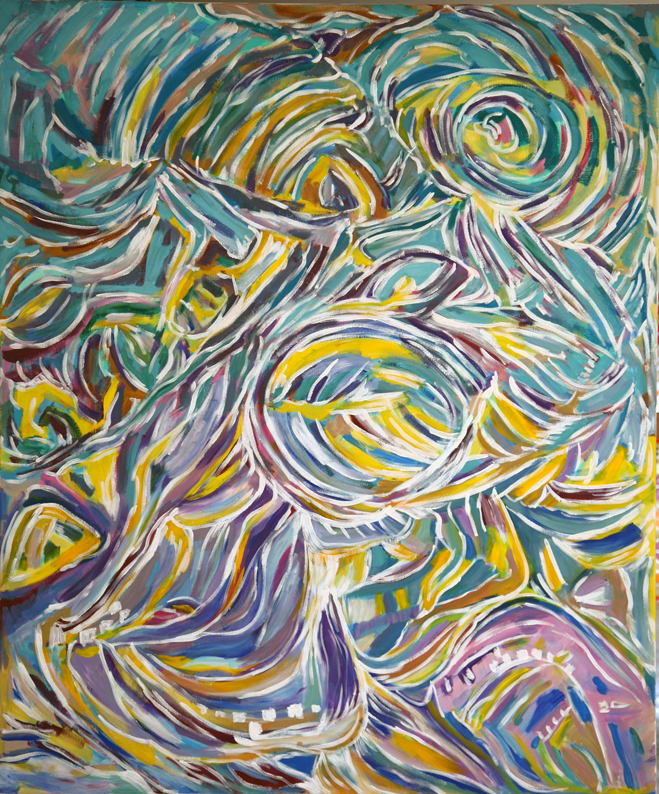
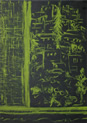
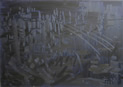
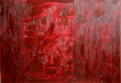
Neiger-Fleischmann uses color to “embroider” local views, both as
depictions of reality and as symbols of the delicate tissue/fabric of
life. Some of the paintings depict the landscape seen from the studio
window, using lines of color on a velvety monochrome background.
Others in the series use the same color for both image and background,
reflecting both outer reality (the landscape) and the inner, emotional
one.
Topgraphic Jerusalem
(2012)
|